Thinking about buying a Florida condo? The view, amenities, and ease of ownership can be appealing, but in Florida, the building itself deserves as much attention as the unit. If you are comparing properties, understanding how condo governance, fees, inspections, and reserves work can help you make a more informed decision and avoid expensive surprises. Let’s dive in.
Why Florida condo due diligence matters
When you buy a Florida condominium, you are buying a separate parcel of real property along with an undivided share in the common elements and common surplus. That means your ownership goes beyond the walls of your unit. Your experience as an owner is shaped by the association, the building documents, and the condition of the property as a whole.
In practical terms, the declaration, bylaws, rules, and board decisions can affect your day-to-day use, your renovation plans, and your monthly costs. In many Florida condo purchases, the building file matters just as much as the finishes, floor plan, or view. That is especially true now because Florida places significant emphasis on reserve studies, milestone inspections, and record access.
Review ownership and common elements
One of the first things to understand is what is actually private, what is shared, and what is reserved for certain owners. Florida law distinguishes between common elements and limited common elements. Limited common elements are parts of the property reserved for use by certain units rather than all owners.
This can matter more than many buyers expect. Parking spaces, balconies, storage areas, or certain access areas may be governed differently depending on the declaration. Before you move forward, review the condo documents carefully so you know what comes with the unit and what use restrictions may apply.
Ask how the building is governed
In Florida, the condominium association operates the condominium and must be a Florida corporation. Officers and directors owe fiduciary duties to unit owners, which underscores how important board decisions can be.
For you as a buyer, that means governance is not an abstract issue. A well-run association can help support smoother operations and clearer budgeting, while poor communication or unresolved building issues can create uncertainty. Reading recent meeting minutes and financial materials can give you a clearer picture of how the property is being managed.
Understand what condo fees cover
Monthly condo fees are often one of the first numbers buyers compare, but the lowest fee is not always the strongest value. In Florida, association assessments are the owners’ share of common expenses, and those expenses can include operation, maintenance, repair, replacement, or protection of common elements and association property.
They may also include items such as security, directors-and-officers insurance, road maintenance, in-house communications, and other services that generally benefit owners. Financial reports commonly break out categories like management fees, taxes, recreation facilities, refuse collection, utilities, lawn care, building maintenance and repair, insurance, administration, and reserves.
Higher amenities can mean higher budget pressure
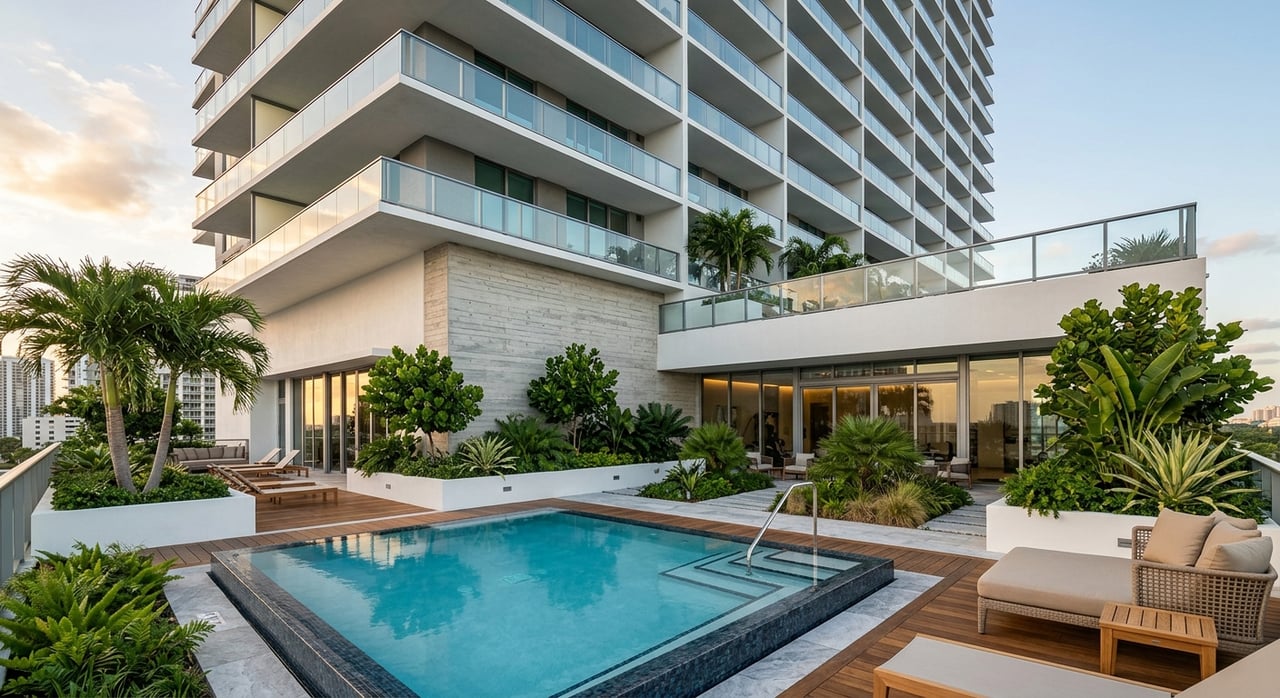
If a building offers extensive services or amenities, those features usually affect the association budget. Amenity-heavy or service-heavy buildings often face more budget pressure because those shared costs are funded through the condo budget.
That does not make those buildings a poor choice. It simply means you should evaluate whether the monthly assessment matches the services you value and whether the overall budget appears sustainable.
Fees are not the whole carrying cost
It is also important to separate condo dues from property taxes. In Florida, ad valorem taxes and special assessments by taxing authorities are assessed against each condominium parcel, not the condominium property as a whole.
In other words, your monthly condo fee is only one part of your ownership cost. You should also account for your individual property tax obligations when evaluating affordability.
Watch for special assessments and reserve funding
A key question in any Florida condo purchase is not just what the monthly assessment is today, but whether it is likely to change. Florida distinguishes regular annual budget assessments from special assessments. Reserve funding for required structural items may be paid through regular assessments, special assessments, lines of credit, or loans, with majority-owner approval required in some cases.
If assessments go unpaid, they can become liens, accrue interest, and trigger late fees if the declaration or bylaws allow them. For buyers, the bigger takeaway is that a building with underfunded reserves or large upcoming projects may face future financial pressure.
Review how much goes into reserves
Reserve funding is one of the clearest indicators of how a building is planning for long-term maintenance. If reserve contributions are thin, or if the association has relied repeatedly on special assessments, that should prompt deeper review.
A low monthly fee can look attractive at first glance, but if it reflects delayed funding for major repairs, the true cost of ownership may be higher over time. Looking at reserves in context with inspection reports, meeting minutes, and upcoming work is often more useful than judging one line item alone.
Know the difference between milestone inspections and SIRS
Florida buyers should be careful not to confuse two separate building health tools: milestone inspections and the Structural Integrity Reserve Study, or SIRS. They serve different purposes, and both can be important.
A milestone inspection is a structural inspection performed by a licensed architect or engineer. As a general rule, buildings that are three habitable stories or higher must have one by the end of the year when the building reaches 30 years of age based on the certificate of occupancy date, and every 10 years after that. In some cases, a local enforcement agency can require the first inspection at 25 years based on local conditions.
What milestone inspections tell you
After a milestone inspection, the association must distribute the inspector-prepared summary to owners within 45 days, post it on the property, and publish it on the website if one is required. If a phase-two inspection identifies structural deficiencies, repairs generally must begin within 365 days unless the local government requires an earlier start.
For a buyer, this information can be highly relevant. It can help you understand whether the building has unresolved structural issues, active repair obligations, or major work ahead.
What a SIRS tells you
A SIRS is a budgeting study, not the same thing as an inspection. For qualifying residential condominium buildings, it must be completed at least once every 10 years and cover items such as the roof, structure, fireproofing and fire-protection systems, plumbing, electrical systems, waterproofing and exterior painting, windows and exterior doors, and other qualifying items that affect structural integrity.
The study must identify remaining useful life, estimated replacement cost or deferred-maintenance expense, and a reserve-funding plan. It must be based on a visual inspection and performed or verified by a licensed engineer, architect, or qualified reserve specialist.
Why timing matters in older buildings
For older Florida condo associations, timing matters. Unit-owner-controlled associations in existence on or before July 1, 2022, had deadlines tied to completing their SIRS by the end of 2025, or by the end of 2026 if they were completing a milestone inspection by then.
Florida also tightened reserve funding rules for buildings that require a SIRS. For budgets adopted on or after December 31, 2024, qualifying unit-owner-controlled associations generally may not vote to provide no reserves or less reserves than required for SIRS items, except in limited circumstances.
This is one reason buyers should look closely at recent and upcoming budgets. A building may be in the middle of adjusting to updated reserve requirements, and that can affect future costs.
Use public records and association records
Florida gives buyers meaningful ways to review condo records. Associations must keep official records including the declaration, bylaws, articles, rules, minutes, accounting records, audits, financial reports, SIRS, structural and life-safety inspection reports, bids, and building permits.
The association must also keep copies of the declaration, articles, bylaws, rules, question-and-answer sheet, most recent annual financial statement, and annual budget on the property so they are available to unit owners and prospective purchasers. Owners can inspect records within 10 working days, and records may be reviewed or copied with a portable device.
Online records are becoming more important
For many larger associations, Florida now requires a website or app. As of January 1, 2026, condo associations with 25 or more units that are not timeshares must post digital copies of key records, including governing documents, board minutes, budgets, financial reports, inspection reports, the most recent SIRS, and building permits.
That means buyers increasingly have better access to building information. It also means a missing document or incomplete record trail may warrant additional questions.
Check state reporting databases too
The Florida Department of Business and Professional Regulation maintains a Structural Integrity Reserve Study Reporting Database and a Building Reporting Database. According to DBPR, the SIRS database displays completed submissions as filed, and the building database contains association-reported contact and project information for condo and cooperative buildings that are three stories or higher.
These resources can help you verify whether filings exist and whether the building appears current. They are most useful when read together with the association’s own records rather than in isolation.
Red flags worth a second look
When you review a Florida condo, try to connect the dots across fees, reserves, inspections, and board records. One document rarely tells the whole story.
Some issues that may justify deeper follow-up include:
- Missing SIRS information
- Thin reserve funding
- Recurring special assessments
- Open repair items in meeting minutes
- Unresolved inspection findings
- Active building permits tied to major work
- Use restrictions that affect renovations or ownership expectations
None of these points automatically rules out a purchase. They simply suggest that you should ask more questions before relying on the asking price or assuming the building is well capitalized.
Smart questions to ask before buying
A focused question list can make your condo search more efficient and help you compare buildings on substance, not just presentation. Consider asking:
- Is the building subject to a current milestone inspection and SIRS?
- What does the monthly assessment cover?
- How much of the budget is going into reserves?
- Are special assessments, loans, lines of credit, or reserve pauses being considered?
- Are there open repair items, inspection findings, or building permits I should review?
- What areas are limited common elements or otherwise use-restricted?
- What declaration or rule restrictions could affect renovations or use?
In a Florida condo purchase, asking careful questions early can save time, reduce uncertainty, and help you evaluate value more clearly.
If you are considering a Florida condo, a disciplined review of the building is just as important as finding the right unit. The right purchase is not only about design and location. It is also about understanding governance, future costs, and the condition of the property with clarity and discretion. If you want strategic guidance on evaluating condo opportunities, schedule a private consultation with the Michael Graves Team.
FAQs
What should you review before buying a Florida condo?
- You should review the declaration, bylaws, rules, budget, financial statements, meeting minutes, inspection reports, reserve study information, and any records related to repairs or permits.
What do Florida condo fees usually cover?
- Florida condo fees generally cover your share of common expenses such as maintenance, repair, insurance, management, utilities, refuse collection, recreation facilities, administration, and reserve funding, depending on the building.
What is the difference between a milestone inspection and a SIRS in Florida?
- A milestone inspection is a structural inspection of certain older buildings, while a SIRS is a reserve budgeting study for key structural and building-system components.
Can a Florida condo have special assessments?
- Yes. In Florida, associations can impose special assessments in addition to regular budget assessments, and these may be used for repairs, replacement work, or reserve-related needs.
Are Florida condo property taxes included in condo dues?
- No. In Florida, property taxes and taxing authority assessments are assessed against each condominium parcel separately, so they are not the same as your condo dues.
How can you check a Florida condo building’s records?
- You can review association records that must be maintained under Florida law, and for many buildings you may also find information through required digital records and DBPR reporting databases.