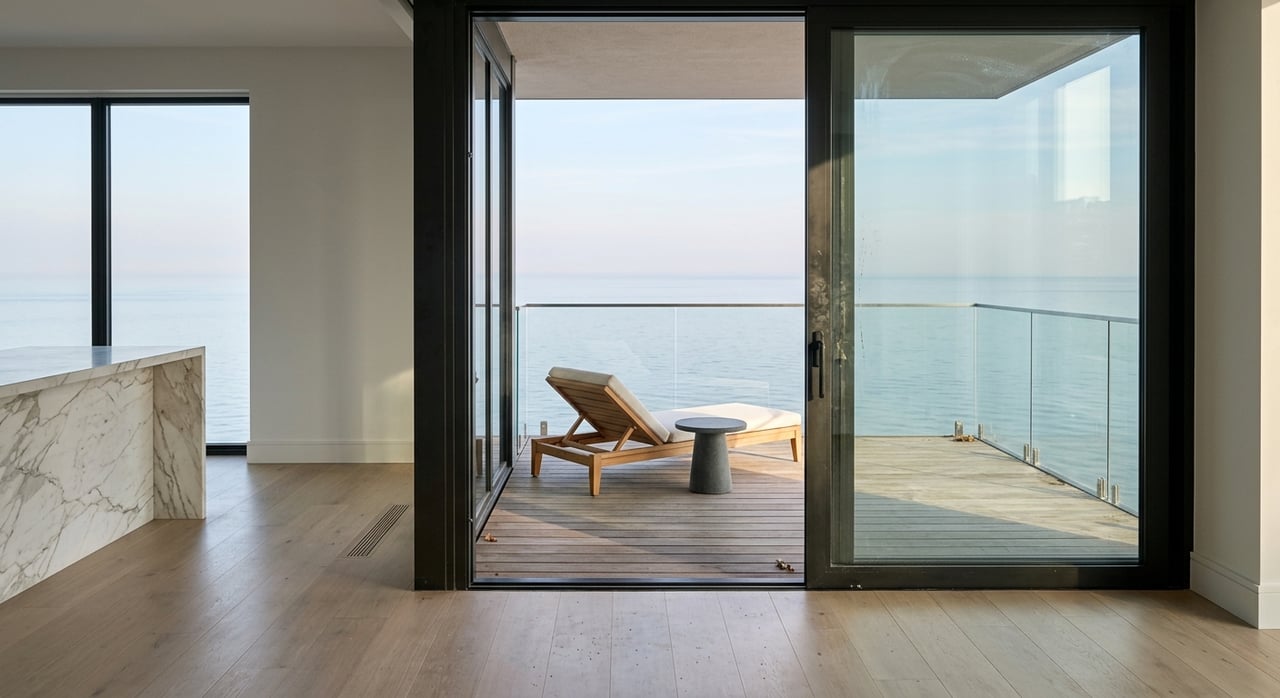
What does downtown waterfront luxury really look like in New York? It is not one single lifestyle, price point, or housing type. If you are weighing a primary residence, a pied-à-terre, or a long-term luxury purchase, understanding how each waterfront enclave actually lives day to day can help you make a sharper decision. Let’s take a closer look.
Downtown waterfront living starts with three distinct identities
Downtown waterfront luxury in New York is best understood through three different patterns: Tribeca, Battery Park City, and Brooklyn Heights. Each offers water access and strong residential appeal, but the built form, daily rhythm, and value proposition differ in meaningful ways.
For many buyers, that difference matters more than the view itself. A waterfront address may sound similar on paper, yet your experience can shift dramatically depending on whether you want loft character, planned convenience, or historic residential fabric.
Tribeca offers loft heritage and lower-rise scale
Tribeca stands apart for its preserved industrial architecture and relatively low-rise feel. City planning materials describe many of its loft buildings as late-19th- and early-20th-century structures, often around six to twelve stories, which creates a streetscape that feels different from newer tower-heavy parts of Manhattan.
That physical character is a major part of Tribeca’s luxury appeal. If you value volume, historic architecture, and a more understated downtown expression of luxury, Tribeca often delivers a setting that feels both residential and architecturally distinctive.
Battery Park City feels planned and park-centered
Battery Park City was designed through a master plan rather than built gradually over time. According to the Battery Park City Authority, the 1979 plan balanced residential, commercial, retail, and park space, and the neighborhood now includes more than 13,000 residents and 36 acres of open space.
In practical terms, that planning gives the area a highly organized feel. For buyers who want ease, predictable circulation, open sky, and strong access to daily amenities, Battery Park City often reads more like a managed waterfront district than a traditional Manhattan neighborhood grid.
Brooklyn Heights leads with historic residential character
Brooklyn Heights presents a different kind of waterfront luxury. Its historic district, designated in 1965, is known for 19th-century brownstones, brick homes, churches, carriage houses, and a range of architectural styles including Federal, Greek Revival, Gothic Revival, and Anglo-Italianate.
That means the neighborhood experience begins with a preserved residential setting before it opens to the waterfront. If your definition of luxury includes architectural continuity, classic streetscapes, and a strong sense of place, Brooklyn Heights offers a compelling case.
Daily life on the waterfront
Luxury buyers are rarely choosing on views alone. In downtown New York, the strongest waterfront neighborhoods combine scenery with genuine usability, whether that means recreation, walking access, or easy time outdoors between meetings and commitments.
This is where the distinctions become even clearer. The riverfront in each area supports a different kind of everyday routine.
Tribeca’s waterfront is active and flexible
Tribeca’s stretch of Hudson River Park is especially usable for everyday life. Pier 25 and Pier 26 include sports, boating, skateboarding, lounging areas, native-plant habitat, lawn space, boardwalks, and a tide deck.
For you as a resident, that translates into a waterfront that supports quick, casual use. It works for a morning walk, a short break by the river, or time outdoors without needing to turn the outing into a major event.
Battery Park City prioritizes open space
Battery Park City is the most park-centered of the group. The neighborhood’s 36 acres of open space, public art, and activities like walking, bird watching, yoga, running, and bike riding shape daily life in a way that feels unusually open for downtown Manhattan.
That matters if you want your environment to feel legible and easy to navigate. For part-time residents in particular, Battery Park City can be appealing because the public realm is straightforward, polished, and easy to use on arrival.
Brooklyn Heights connects promenade and park
Brooklyn Heights pairs the Promenade with Brooklyn Bridge Park, a major waterfront amenity that spans 85 acres and 1.3 miles. The park includes lawns, promenades, gardens, and free public access, giving the waterfront a true destination quality.
The Promenade adds another layer of identity. Local zoning preserves an important view reference line along its west face, reinforcing how central open skyline views are to the area’s long-term character.
Dining and convenience shape the experience
Waterfront living also has to work on a practical level. Dining, transit, and easy movement through the city all affect whether a luxury property feels effortless or inconvenient.
Across these neighborhoods, convenience shows up in different forms rather than one uniform package.
Tribeca blends recreation with nearby dining
Tribeca’s waterfront benefits from food options directly connected to Hudson River Park, including City Vineyard and other park-based stops. That creates a lifestyle that feels integrated, with dining woven into the same waterfront environment used for recreation and downtime.
For buyers who want an active but polished downtown routine, this blend can be especially attractive. You are not simply near the water. You are using it as part of daily life.
Battery Park City emphasizes easy daily access
Battery Park City benefits from nearby Brookfield Place, which offers more than 30 eateries, Hudson Eats, and a mix of chef-driven and fast-casual options overlooking the Hudson. This supports a lifestyle that feels convenient without requiring much planning.
Transit access is also a key strength. The area is served by most subway lines, the PATH, Citi Bike stations, and nearby ferry access, which can make it especially functional for buyers who split time between New York and other locations.
Brooklyn Heights balances neighborhood feel and waterfront access
Brooklyn Heights and Brooklyn Bridge Park offer a more layered setup. The park itself includes cafés, concessions, and restaurants, while nearby Brooklyn Heights and DUMBO expand the dining landscape further.
This gives you a waterfront experience that still feels tied to a broader neighborhood fabric. For many buyers, that balance between destination waterfront and established residential context is part of the appeal.
Market context and pricing tiers
Not every downtown waterfront purchase competes at the same price point. One of the clearest takeaways from the current market is that the waterfront premium shows up differently depending on neighborhood character, housing stock, and scarcity.
As of April to May 2026, reported median listing prices were about $4.5 million in Tribeca, $1.295 million in Battery Park City, and $1.9 million in Brooklyn Heights. All three were also classified as buyer’s markets in May 2026, with median days on market of 52 in Tribeca, 43 in Battery Park City, and 33 in Brooklyn Heights.
What the numbers suggest
These pricing tiers reinforce that downtown waterfront luxury is not a single category. Tribeca commands a substantially higher median listing price, which aligns with its loft inventory, scarcity, and architectural identity.
Battery Park City sits in a different lane, often appealing to buyers who prioritize convenience, condos, and open space. Brooklyn Heights falls between the two in median listing price, reflecting its combination of historic housing stock, protected character, and highly recognizable waterfront setting.
Long-term value depends on more than views
In luxury real estate, long-term value is often strongest where character is protected and public investment continues. That principle is especially relevant along the downtown waterfront.
Tribeca and Brooklyn Heights benefit from historic-district protections. Battery Park City operates within a special district with design controls, and Brooklyn Heights also benefits from zoning protections tied to Promenade view corridors.
Resilience investment matters
Another part of the value story is resilience. Lower Manhattan Coastal Resiliency is designed to reduce flood risk while improving waterfront access, and Battery Park City’s resilience projects are being built to protect the neighborhood from storm surge and sea-level rise.
For a luxury buyer, this matters because waterfront ownership is not only about aesthetics. It is also about how an area is being maintained, protected, and positioned for the future.
Which waterfront fit is right for you?
If you are comparing these neighborhoods at an early stage, a simple framework can help. Tribeca is often best understood through loft heritage and active riverfront recreation. Battery Park City stands out for planned, park-heavy, highly convenient condo living. Brooklyn Heights is defined by historic residential character and Promenade-oriented views.
The right choice depends on how you live, how often you are in the city, and what type of housing stock aligns with your goals. For some buyers, that means a full-service condo with easy lock-and-leave convenience. For others, it means protected architecture, a lower-rise streetscape, or a waterfront setting that feels more residential than contemporary.
In a market as nuanced as New York, the most effective luxury purchases begin with clarity. If you are evaluating downtown waterfront opportunities, the strongest strategy is to weigh character, usability, pricing, and long-term positioning together rather than focusing on view alone.
If you are considering a waterfront condo, co-op, townhouse, or new development residence in New York, the Michael Graves Team offers discreet, data-driven guidance tailored to your goals. Schedule a private consultation.
FAQs
What makes Tribeca waterfront luxury different from other downtown New York neighborhoods?
- Tribeca stands out for its preserved loft architecture, lower-rise scale, and active access to Hudson River Park amenities like Pier 25 and Pier 26.
What is the lifestyle difference in Battery Park City waterfront living?
- Battery Park City offers a planned, park-centered environment with 36 acres of open space, strong transit access, and a condo-oriented lifestyle that can work well for full-time or part-time residents.
What defines Brooklyn Heights waterfront living for luxury buyers?
- Brooklyn Heights combines a historic residential district with the Brooklyn Heights Promenade and direct proximity to Brooklyn Bridge Park, creating a waterfront experience rooted in preserved neighborhood character.
How do downtown waterfront prices compare in Tribeca, Battery Park City, and Brooklyn Heights?
- As of April to May 2026, reported median listing prices were about $4.5 million in Tribeca, $1.295 million in Battery Park City, and $1.9 million in Brooklyn Heights.
Why does resilience matter in downtown New York waterfront real estate?
- Resilience investment matters because projects in Lower Manhattan and Battery Park City are designed to reduce flood risk while improving or protecting waterfront access over time.